Rethinking Tank Integrity: Why Corrosion Mapping is Reshaping Asset Reliability in the Petrochemical Sector
By Integrity NDT Projects
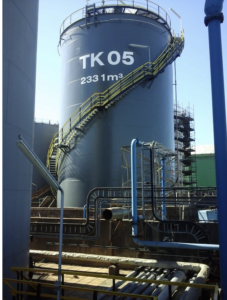
Across Africa’s petrochemical landscape, a quiet but significant shift is underway. Conversations that once focused almost exclusively on throughput and operational output are increasingly centred on a different question: how do we sustain the reliability of critical infrastructure that has already served the industry for decades?
For asset integrity managers, plant engineers, and inspection professionals, this challenge is becoming more pronounced each year. Many storage tanks across refineries, depots, and processing facilities were commissioned decades ago. While they were designed for long service life, they were not built with the advanced monitoring capabilities available today
The result is a growing operational reality: aging infrastructure operating in demanding environments where corrosion remains one of the most persistent threats to safety, reliability, and sustainability.
Corrosion, by its very nature, is subtle. It rarely appears as a dramatic failure event. Instead, it progresses slowly through mechanisms such as floor plate thinning, pitting, microbiologically influenced corrosion (MIC), and corrosion under insulation. Often, these processes remain undetected until conventional inspection intervals reveal deterioration that has already advanced beyond early stages.
For an industry that operates continuously and where downtime carries significant economic and environmental implications, this raises an important question: how do we improve visibility into asset health between inspection cycles?
Seeing Beyond Traditional Inspection
Historically, inspection programmes relied on periodic manual thickness measurements and scheduled internal tank inspections. While these methods remain essential, they offer only snapshot insights rather than a continuous understanding of asset condition.
This is where the evolution of advanced non-destructive testing technologies is changing the conversation.
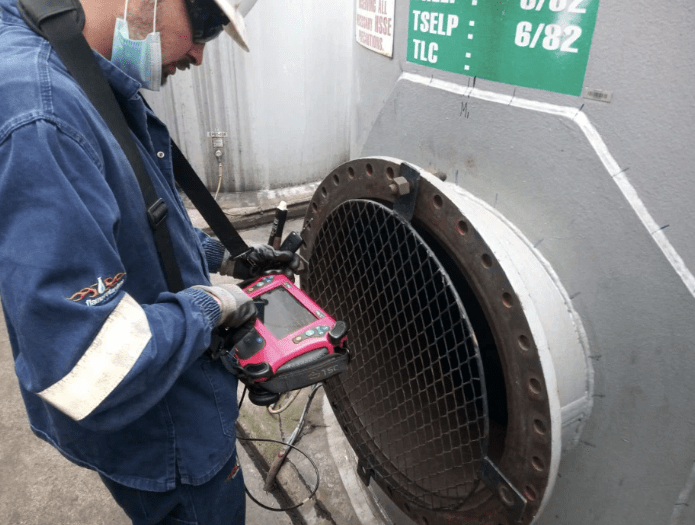
Corrosion mapping, enabled by modern inspection tools, allows operators to visualise degradation patterns across entire surfaces rather than relying on isolated measurement points. Phased Array Ultrasonic Testing (PAUT), for example, enables high-resolution scanning of tank walls and floors, revealing corrosion trends and areas of accelerated degradation with remarkable clarity.
Similarly, Pulse Eddy Current (PEC) technology provides the ability to detect corrosion beneath insulation and coatings—an area historically difficult to assess without intrusive inspection methods. By enabling inspection without extensive insulation removal, PEC supports both operational efficiency and more frequent integrity monitoring.
For tank floor integrity assessments, Magnetic Flux Leakage (MFL) scanning plays a critical role in identifying corrosion-related metal loss across large areas, particularly during planned maintenance shutdowns.
At Integrity NDT, these technologies form the foundation of advanced inspection programmes developed through years of supporting petrochemical operators across complex industrial environments. Our teams routinely deploy PAUT, PEC and MFL as part of integrated corrosion mapping programmes, enabling asset owners to obtain a far more detailed understanding of degradation behaviour within aging storage infrastructure.
The objective is not simply to identify defects, but to provide the actionable integrity data that engineers and maintenance planners require to make informed decisions about repair strategies, inspection intervals and asset life extension.
Reliability as an Integrity Principle
As inspection technologies advance, another principle has emerged as equally important: reliability of response.
Petrochemical operations do not pause when integrity concerns arise. Inspection capability must therefore be available when facilities need it—not only during scheduled maintenance windows, but also when unexpected integrity questions surface.
For organisations operating critical infrastructure, access to experienced inspection teams and advanced diagnostic technologies 24 hours a day, 365 days a year is becoming an essential part of risk management.
Integrity NDT has structured its operational model around this reality. Our focus on 24/7/365 inspection availability and reliability, combined with specialised expertise in advanced NDT methods, enables operators to access the insights they need when operational decisions cannot wait.
In practice, this means supporting everything from planned shutdown inspections to urgent condition assessments where rapid, accurate data can prevent costly disruptions.
The Next Phase of Asset Stewardship
As Africa’s petrochemical and energy sectors continue to mature, asset stewardship will play an increasingly central role in operational strategy. Facilities that combine advanced inspection technologies with responsive expertise and long-term integrity thinking will be best positioned to extend asset life while maintaining safety and regulatory compliance.
Corrosion mapping and advanced NDT methods are not simply inspection tools—they are part of a broader movement toward predictive, informed, and resilient asset management.
Across the industry, organisations are beginning to recognise that the most valuable insight often lies beneath the surface—waiting to be revealed through the right combination of technology, experience and engineering perspective.
For those responsible for safeguarding critical storage infrastructure, conversations around corrosion are evolving rapidly. And increasingly, these conversations are about visibility, foresight, and operational certainty.
It is a discussion the industry will continue to have as infrastructure ages and expectations rise. Those who engage with these developments early—embracing new technologies, better data, and more proactive integrity strategies — will ultimately shape the next chapter of petrochemical reliability.
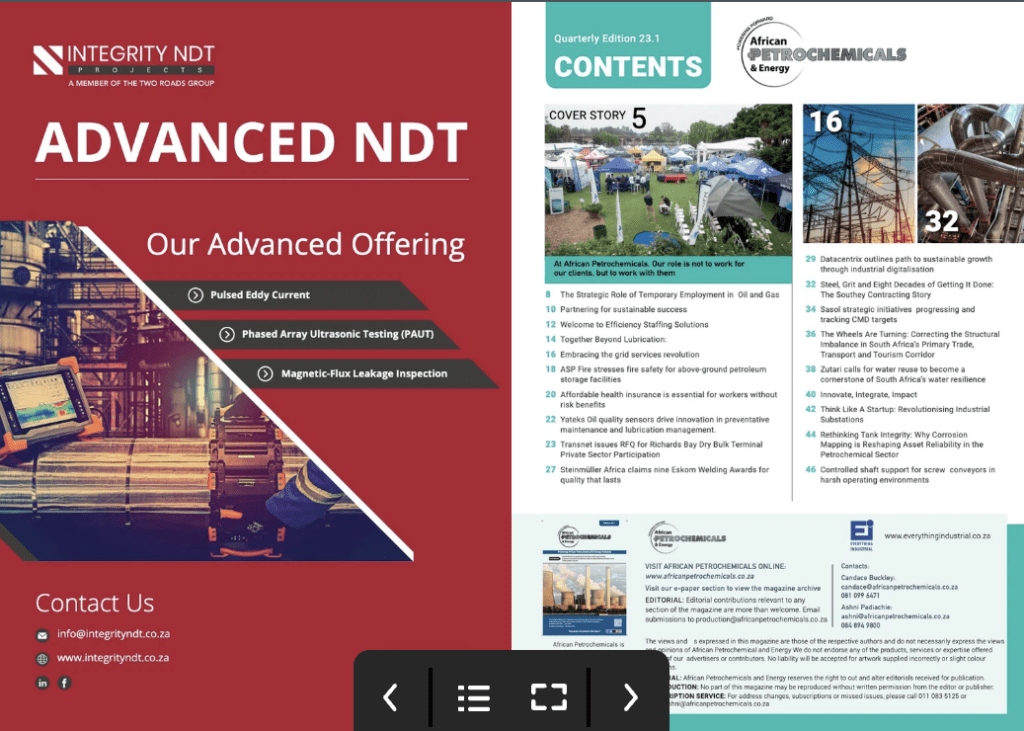
Check out our advert in the African Petrochemicals March Edition. Click here to view online.
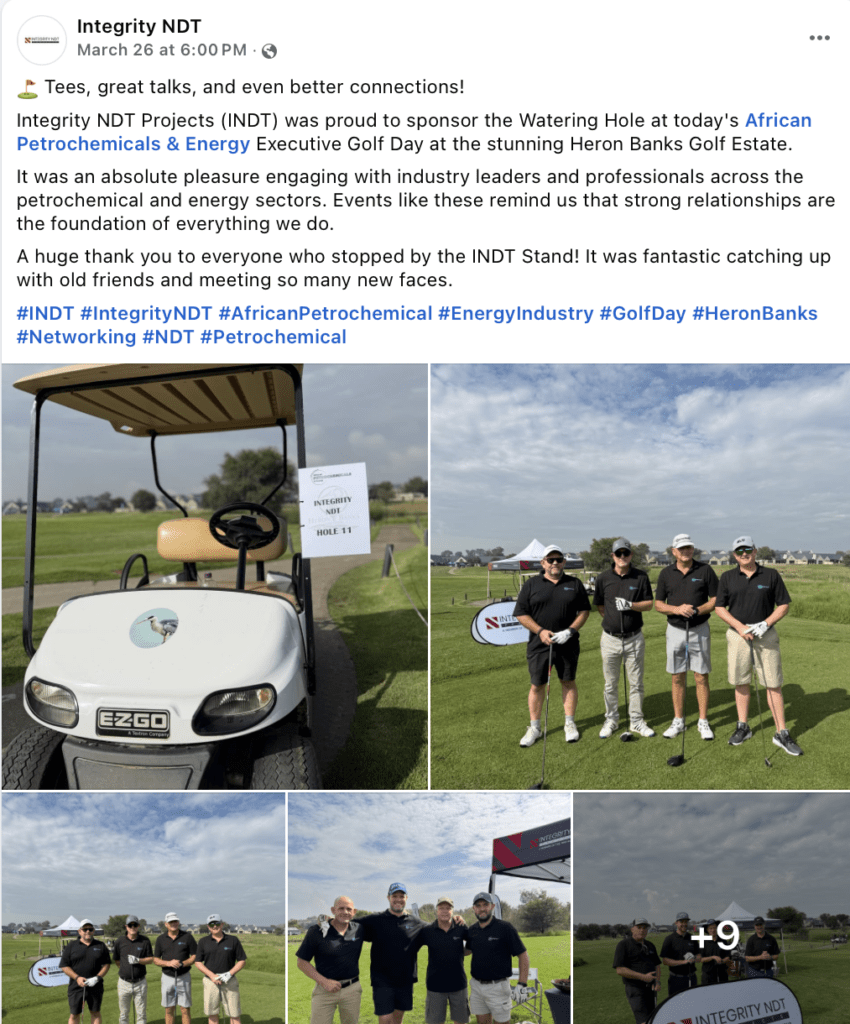
Integrity NDT was proud to be part of the African Petrochemicals Executive Golf Day in March 2026. Click on the Facebook post