Always On: Powering Mining’s Digital Infrastructure with Generators
When banking on data centre partners, how do mines know they’ll have energy contingencies?
Mines are heavy power consumers. While that primarily stems from heavy industrial machinery and equipment across vast sites, a growing portion relates to the digital side of mining. Supporting automation, sensors, and data processing requires a growing share of mining power, either directly from facilities owned by the business, or indirectly through partners that provide technology facilities such as data centres.
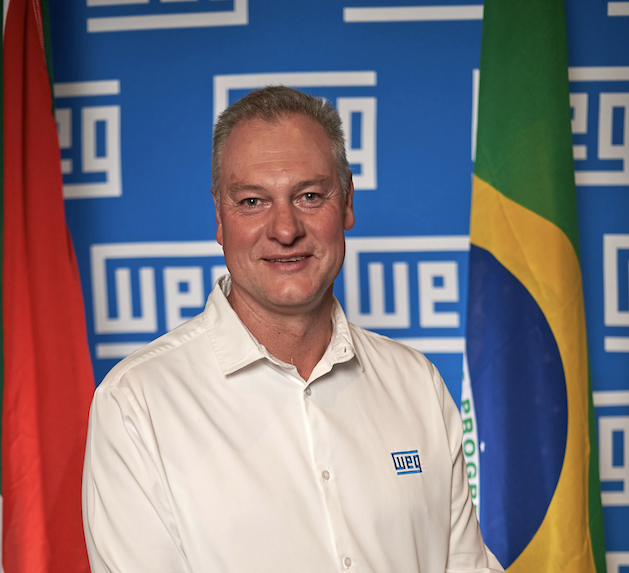
The ability to power digital infrastructure is particularly important in sub-Saharan Africa, says Louis Kotze, Executive for Generator Sets at WEG Africa.
“Many regions in Africa have a shortage of sufficient and reliable power infrastructure, and mines can’t always wait for planned developments to come online. They often now build their own power systems. But there is one area they still often overlook, which is what will power the digital infrastructure that support them?”
Are data centres ready?
Digital infrastructure includes office spaces and network towers, but data centres are the best example. Mines rely on data centres for vital digitisation, such as automation and analytics. No modern mining operation will be efficient and reliable without their support.
This is where power becomes a deal-breaker. These sites, whether large or small, are serious energy users. An “edge” data centre, which is becoming a common part of mining operations, can draw several megawatts. Consumption jumps considerably higher for central data centres that handle bulkier, high-demand computing activities.
Running a data centre isn’t feasible if there isn’t sufficient and reliable energy. Mines evaluate data centre sites on factors such as cost and connectivity. Energy is another important consideration, especially in regions where the energy supply falls short. Yet, mining operators can overlook this when evaluating their third-party suppliers, says Kotze.
“You might think, ‘This data centre is near a city, so it will have access to power.’ But that’s not guaranteed, since data centres often compete for power in communities. Also, grids fail and take the data centre offline. Data centres are like mining equipment. They don’t handle interruptions well and can take time to start up again. You don’t want to use a site that can lose power.”
Generators close energy gaps
How will a data centre site, owned by the mine or a third party, ensure reliable power? Generators are a big part of that answer.
“Mining companies look to renewable energy sources and BESS (Battery Energy Storage Systems) to address overall power demand. They should also look for generators at a data centre because those provide immediate power. It can take a while for a data centre to recover from power failures. That’s why the best sites don’t allow that to happen. They use customised and hybrid generator systems, some comparable to small power plants, to ensure electricity keeps flowing.”
These measures matter to mines. When they evaluate data centre facilities in a region, they want to see appropriate generator systems. But what does such a system look like? How would a mine measure a data centre’s generator setup?
Areas to look at include:
- The generator’s DCP (Data Centre Power) rating
- Uptime certification of the generator system
- Cold start times, power redundancy, and backup infrastructure
- Integration with other site energy sources, such as solar and battery storage
- Management of total harmonic distortion for sensitive computing systems
Such considerations will illuminate how prepared a data centre is to handle mining’s digital workloads, even in energy-poor regions. It’s worthwhile to learn about these nuances by talking to generator experts.
Attendees at Electra Mining Africa 2026 will have the opportunity to meet these experts. Visitors to WEG Africa’s stand can meet Kotze and his team and pick their brains over a complimentary coffee. Visit the expo at Nasrec, Johannesburg, from 7 to 11 September, and nail down what to expect from data centre sites.
“Generators close the gap between the high-demand met by grids and renewables and the always-on nature of data centres. Without them, even a small energy dip can cause hours or even days of downtime for the systems that support mining automation, safety, and planning. If you know what to ask data centres (in-house or out-sourced) about their generator strategies, you’ll know if they are ready to handle your mine’s digital requirements.”
More info, please visit WEG Africa