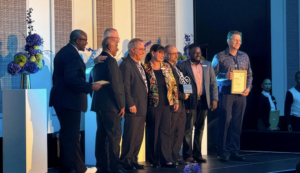
Cape Town’s longest-running family-owned team wear manufacturer takes on the skills shortage
Imagemakers, the local professional garment manufacturer with a track record stretching to 1982, is again bucking industry trends with its business model that is delivering meaningful long-term local employment and a 95% staff retention rate.
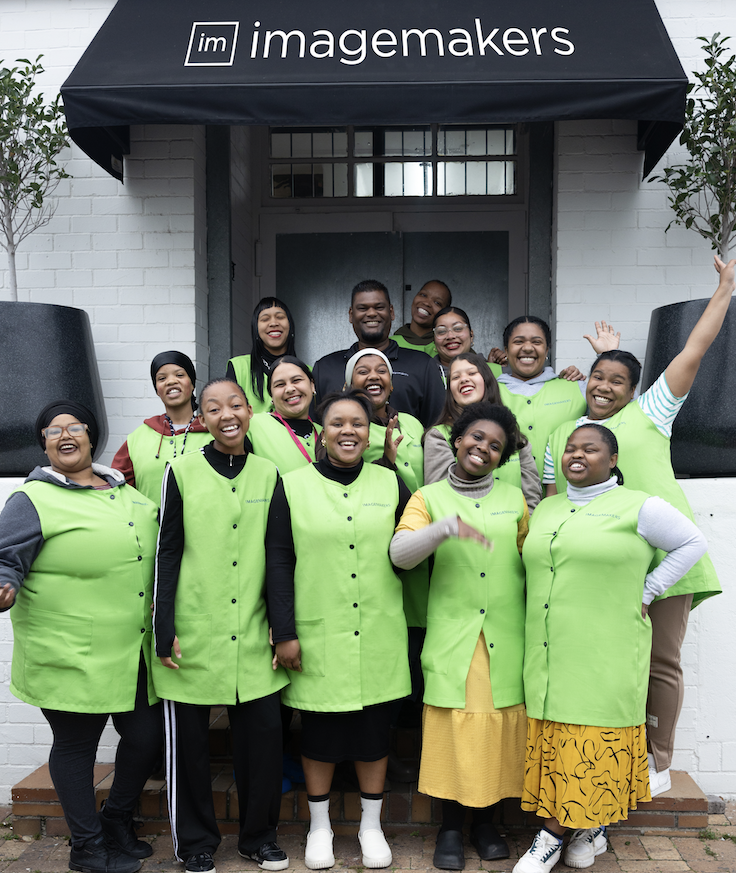
Its unique ‘Stitch by Stitch’ Learnership Programme is a direct response to the dual crisis facing the local labour market: a more than 60% youth unemployment rate, and skills training that is out of sync with real market demand. Its approach is proving that a high-risk, high-reward industrial model can solve this national dilemma.
A new model for learning: no try, only do
The family business, which has dressed more than 21 000 companies, does not follow typical corporate strategy. Most manufacturers focus on theoretical training or simulation training models, because mistakes can be costly. Instead, Imagemakers has built its learnership programme around clear progression pathways, taking participants from training into real production, specialist roles and long-term employment.
In the garment manufacturing industry, learners are often trained in isolation, disconnected from real production environments, and expected to be magically ‘work ready’ without ever having stepped into a real business. Most have never experienced real accountability, deadlines, or quality standards. At Imagemakers, they remove that disconnect early. Learners work inside the actual business, and from Day One are exposed to the real pressures and expectations involved in producing real corporate clothing, says Head of the Learnership School, Dane Govender.
It is a calculated risk business model that is paying off. The resulting higher skills levels and staff retention rates are proof of its effectiveness.
The thinking is simple: if someone is expected to perform like an employee, they need to work like one long before that day arrives. They also need to understand what success and failure look like in a safe, respectful environment where confidence can grow. The school goes by the mantra: ‘first comes courage, then comes confidence’. Mistakes will happen but everyone learns from them, says Govender.
In total, 15 to 20 new learners are trained annually, on real machinery, within real production schedules, producing garments that meet real professional standards. This includes everything from corporate dresses to broader ranges developed alongside leading corporate clothing suppliers in South Africa.
Learners begin with foundational skills and move quickly into supervised real-world production – an industry growth and development opportunity that is almost unheard of on the intern level. As the learners grow in confidence, they begin to specialise – whether that’s in sewing, finishing, quality control, or working on specific garment types. They work on real products from the start, including work uniforms, structured ranges, and detailed production runs that go directly to Imagemakers’ clients.
Govender believes the shift – from observer or learner, to real contributor from the start – is where this programme sets an important example in the industry. Manufacturers benefit from being braver about how they train new talent.
A training programme that leads to real jobs
For Gillian Van de Schyff, joining the Imagemakers’ learnership school marked a turning point in her life. She had completed a short sewing course and earned a small income doing alterations at home, but had never had a formal job.
“Coming here was my first official job,” she says. “That alone boosted my confidence.”
She started out as a learner, and now works across multiple categories and supports others who struggle with specific techniques, a role which has earned her the nickname of “teacher.”
“I didn’t expect to grow this fast,” she says. “But when people trust you, you push yourself harder.”
Another apprentice, Sinovuyo Khwaza, who joined the manufacturer with no factory experience at all, now works independently across all Imagemakers’ office attire ranges and supports final quality checks on large production runs before dispatch.
“It’s different when you know people are going to wear what you made,” she says. “I want to do the best I can. It’s a responsibility that gives me a sense of ownership.”
Achieving high staff retention
Retention is one of the clearest indicators of whether a programme works, and Imagemakers’ Stitch by Stitch Programme is delivering both a 95% pass rate and a post-training employment rate.
If learners eventually move on, it is a positive contribution to the wider economy, because they go into the market with real skills, confidence, and employment opportunities they didn’t have before, says Govender.
As the programme has grown, it has increased its annual intake by 30%, while strengthening mentorship and support systems. Over time, the school has seen that retention improves when learners can clearly see a future that feels achievable – not just promised.
As one intern put it: “We don’t train people to leave – we train people to belong.”
Conclusion
In a country searching for real solutions to unemployment, this model offers rare insights, says Govender. He believes it is proving that building genuine pathways from training to employment does work. It shows how internal skills pipelines can address national challenges, and how businesses can meaningfully solve SA’s unemployment and skills gap problems simultaneously, while surviving the pressures of global competition.
Govender concludes that learnerships fail when there is no next step, but succeed when businesses are willing to build those steps – and stand behind them. Imagemakers is motivated to pay it forward, so that more companies will follow suit.