Zutari strengthens global standing in ENR rankings
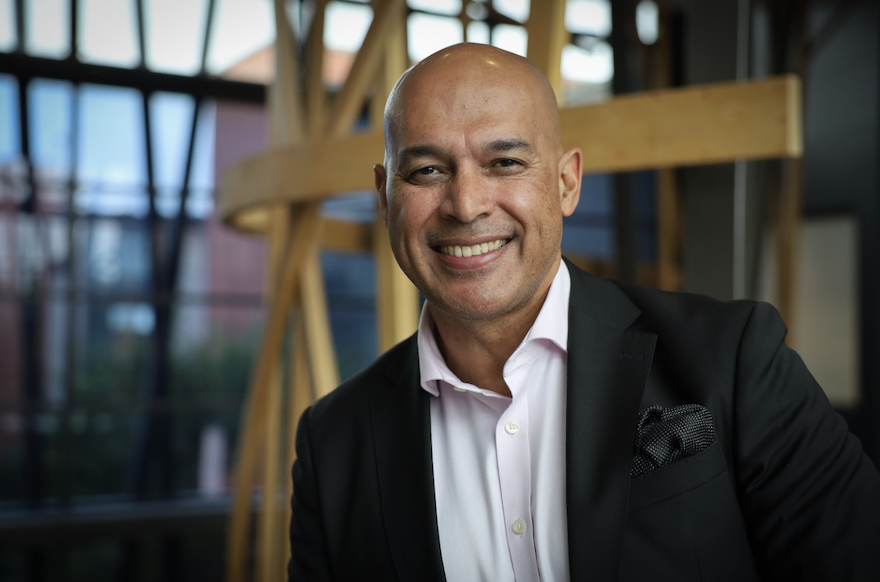
Denver Dreyer, Chief Executive Officer of Middle East and North Africa at Zutari.
Multinational engineering consultancy recognised among the world’s leading international design firms
Zutari has strengthened its position among the world’s leading international design firms, featuring in the Top 100 of Engineering News-Record’s (ENR) 2026 Top 225 International Design Firms ranking and securing a place in the Top 10 in Africa.
The recognition reflects Zutari’s growing multinational footprint and the strength of its engineering capability, with the firm’s work spanning complex infrastructure, energy, buildings, water, transport and other critical sectors across multiple markets.
Zutari’s improved standing follows a significant year-on-year advance in the ENR ranking. The company moved from 99th in 2025 to 68th in 2026, a significant 31-place improvement based on international design-services revenue. In addition, Zutari’s multinational standing has been strengthened by its recognition as one of the world’s leading design firms, debuting at 7th in the Top 10 by Region for Africa.
A multinational reach
The ENR ranking provides an important external measure of the scale of Zutari’s multinational business. The 2026 listing includes Zutari Group Holdings alongside some of the world’s largest and most established engineering and design consultancies. ENR identifies Zutari as operating across a wide geographical footprint, including South Africa, Lesotho, Mozambique, Tanzania, Nigeria, Rwanda, Senegal and the Middle East.
For Denver Dreyer, Chief Executive Officer: Middle East and North Africa at Zutari, the recognition also reflects the increasingly interconnected nature of major infrastructure projects. “Clients want partners who can understand the broader ecosystem that enables data centres, not just the facility itself,” says Dreyer. “Success depends on integrating energy, water, buildings, digital and project delivery expertise to support resilient, efficient and scalable infrastructure.”
The comment appeared in ENR’s analysis of the growing complexity of infrastructure development, particularly the requirements associated with data centres and other major developments. It reinforces the importance of multidisciplinary engineering capability as infrastructure becomes increasingly interconnected.
Complex projects demonstrate engineering capability
Zutari’s inclusion in ENR’s analysis is supported by projects that demonstrate the breadth and complexity of its work. Among those highlighted in the 2026 ENR material is the 825 m Senqu Bridge in Lesotho, on which Zutari is the designer. The bridge rises approximately 90 m above the Senqu Valley and is part of the region’s major infrastructure network. The project is one example of the technically demanding infrastructure that forms part of Zutari’s international portfolio.
The project involved extensive upfront modelling of HVAC technologies, plant configurations, energy performance, carbon impact, lifecycle costs, operational resilience and return on investment. The resulting solution included the phased replacement of legacy water-cooled chillers with high-efficiency air-cooled chillers, upgrades to air-handling units and significant electrical infrastructure improvements.
The first phase introduced 6.42 MW of new air-cooled chiller capacity while allowing the retail precinct to remain operational throughout delivery. The project demonstrates how engineering can translate net-zero ambitions into practical interventions that improve energy and water performance while maintaining operational continuity.
The ENR survey also included the Square Kilometre Array Observatory (SKAO) among the challenging and unique projects considered for Zutari’s submission, alongside the Senqu Bridge and Liberty project.
Recognition of a changing engineering landscape
Zutari’s rise in the ENR rankings comes as the international design sector responds to increasingly complex infrastructure requirements. ENR’s analysis notes growing demand for multidisciplinary expertise as projects such as data centres, smart cities, mixed-use developments, sports venues and major urban infrastructure require closer integration of digital, energy, water and built-environment systems.
For Zutari, this aligns closely with its approach to engineering: bringing together different disciplines and regional expertise to solve complex problems. The result is recognition not simply of the scale of Zutari’s international business, but of the engineering capability being delivered from Africa into increasingly global markets.
“Being recognised among the leading international design firms is an important reflection of the capability and commitment of our people,” concludes Dreyer. “It demonstrates that engineering expertise developed in Africa can compete and create value on an international stage.”